The Florida Institute for Cybersecurity Research (FICS) at the University of Florida has worked on hardware assurance for many years and is a pioneer in developing new test methods for detecting security-relevant modifications in integrated circuits and chip packages. Among its latest tools for chip integrity testing, a TeraCube M2-R system has been installed and commissioned.
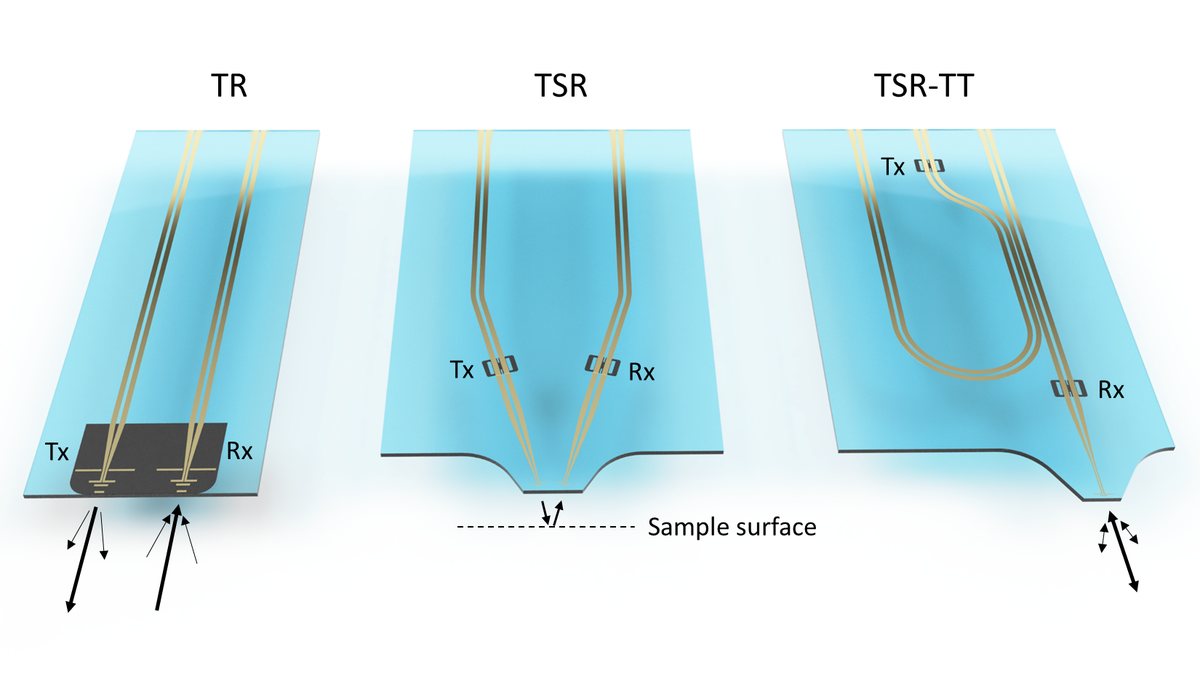
Why THz near-field reflection
Many packaged devices are opaque or only partly transparent to THz radiation, which rules out simple transmission measurements. The M2-R configuration uses transceiver microprobes that emit and detect the THz pulse at the same tip — giving sub-wavelength resolution in reflection on large, complex or THz-opaque structures, without contact and without opening the package.
The approach complements established non-destructive inspection methods: the time-resolved THz signal carries depth and material information from inside the package.
See it in action
A short video by group leader Dr. Navid Asadizanjani on his YouTube channel “Physical Assurance and Inspection of Electronics” shows how the TeraCube is used for chip integrity testing: watch on YouTube (external site).
References
- A. Michalski, S. Sawallich, J. True, N. Asadizanjani, M. Nagel, High-resolution terahertz near-field reflection measurements for complementary non-destructive inspection of integrated circuits, IRMMW-THz 2021. ieeexplore 9567363
- J. True, C. Xi, N. Jessurun, K. Ahi, M. Tehranipoor, N. Asadizanjani, Terahertz based machine learning approach to integrated circuit assurance, ECTC 2021. 10.1109/ECTC32696.2021.00351
- J. True et al., Review of THz-based semiconductor assurance, Opt. Eng. 60(6), 060901 (2021). 10.1117/1.OE.60.6.060901